Easy Choices, Hard Life
Dru Riley quit a high-paying consulting gig in 2017 because it was too comfortable. Three years on a bike in Atlanta, then he launched Trends.vc. He's trained an AI on himself. We talked about comfort, externalities, and what humans still have that the models can't take. Yet.
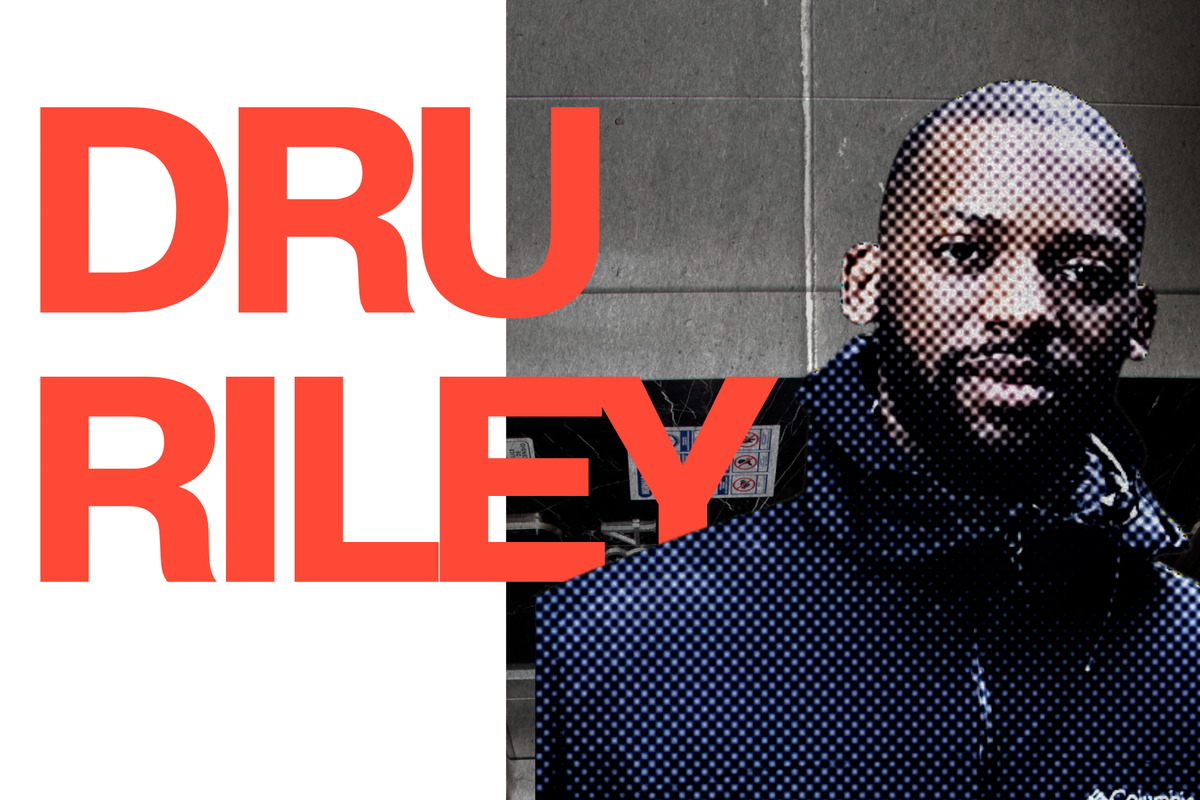
Age of Robots · Issue 01 · Interview
Dru Riley left a high-paying consulting gig in 2017 because it was too comfortable. He spent three years on a bike in Atlanta, building nothing, before launching Trends.vc. He writes every day. He's trained an AI on himself. We talked about comfort, externalities, and what humans still have that the models can't take. Yet.
You left a comfortable job in 2017 because it was too comfortable. That's a strange thing to say. Most people spend their lives chasing comfort. Now AI promises the most comfortable era in human history. Fewer decisions, less friction, optimized everything. Should we be worried about getting what we wished for?
There's an essay I keep coming back to about why capitalism never reduced the workload. We're more productive than we were 30 or 50 years ago. People still work just as hard. I agreed with the author. Recently I tried to argue the other side. I couldn't.
Abstraction involves a trade. Convenience for privacy. Convenience for cost. Convenience for control. But abstraction also gives you power. I can do things with AI that I couldn't do alone. Both are true at the same time. You gain capability and lose autonomy in the same motion, because you're delegating to models trained on someone else's priorities.
The first move is choosing your trade-offs consciously. You can't reject AI outright. To counter it, you have to use it.
Back to comfort specifically. It was too comfortable. I care about comfort. I care about income. But I care about growth more than I care about either. There's a thing Nassim Taleb talks about: the turkey problem. A turkey is comfortable right up until Thanksgiving. Risk doesn't announce itself. It accumulates quietly until it hits all at once.
You're better off chasing risk so it doesn't chase you. If you don't manage it, it manages you.
"You're better off chasing risk so it doesn't chase you."
You spent three years making nothing. No product, no revenue, no audience. Just a man on a bike in Atlanta, listening to podcasts, trying to feel his way toward the thing he could do forever. An AI can now do that search in seconds. Here are 50 businesses matched to your personality profile. But you wouldn't have found Trends.vc that way. What did the emptiness teach you that efficiency never could?
Those three years were the most unproductive and most important period of my life.
I left a consulting job where I was billing well and accumulating capital. I had time and no direction. I rode my bike around Atlanta, listened to podcasts for hours and ran a long idea sprint: tiny experiments, landing pages, half-built products. Most went nowhere.
An AI could hand me 50 personality-matched business ideas today. Some of them would probably be good. But what the emptiness taught me is that discovery and identity aren't the same problem. AI can solve the discovery problem. It can't solve the identity problem.
During those three years, I wasn't searching for a business. I was learning what kind of work I could sustain without burning out or losing interest. That's a feeling, and you can't shortcut a feeling. I had to sit inside the discomfort of not producing anything long enough to hear what I actually wanted.
Trends.vc came out of that. I started writing research reports because I was already doing the research for myself. The business was a byproduct of curiosity that had time to compound. If someone had handed me a list of 50 options in month one, I would've picked something that looked good on paper and quit within a year.
The emptiness taught me that alignment takes reps. You have to try things, feel the resistance or the pull and keep going until one of them sticks in a way you can't explain logically. Efficiency skips the reps. And without the reps, you don't trust the answer.
Yesterday you published "Somebody Has to Absorb It." You traced a line from daylight savings to Uber's subsidy model to enslaved labor. All examples of someone bearing the hidden cost of someone else's gain. In the AI economy, who's absorbing it right now, and do they know?
Creators.
Their work was used to train the models without compensation. And as a group, they're also using these tools. The externalities cut both ways. But did creators benefit in an outsized way relative to the investors and companies positioned to build the models and capture the upside? They didn't. In relative terms, creators lost. The companies that built on that work trained on millions of books, articles and private data without compensation. Now they attack open-source models for distilling against their outputs. Pull the ladder up once you've climbed it.
Time will tell whether the tools creators get back are a net positive compared to what they missed in compensation. But the negative externalities land hardest on the people who were trained on and don't have the capital or opportunity to invest in the labs themselves.
White-collar workers will absorb the bulk of the impact. I don't love making predictions. I'd rather prepare for multiple futures and act with conviction. But I feel it. The next two to three years will be far more unsettling than the last two. The creative destruction coming isn't limited to companies. It's entire professions. Think of it like a sandpile. Grains keep stacking. Each one seems harmless. Then one grain triggers the avalanche, and the phase transition, once it starts, doesn't stop.
"Pull the ladder up once you've climbed it."
You've been writing your 100 Rules since 2013. Each one is a scar with a lesson in it. Rule 32 starts: "Difficulty reveals..." and I want to know how you'd finish that sentence today, in March 2026, with everything you're watching happen.
Difficulty reveals character. I still believe that.
I recently had a friendship end. Without going deep into it, the episode that led to the break involved a stressful moment. Their reasoning was: I was distracted, I was in this or that headspace. But that's the point. When our guards are down, that's when we're at our essence. Stress strips you bare.
I kept coming back to one word: revealing. I'm not angry. I'm not mad at this person. It was just revealing. And I can't unsee what I saw.
We all have bad days. But difficulty, stress and shared pain compress feedback loops. You can know someone for years and never really know them until you go through hard times together. Jiu-jitsu does this. Startups do this. Any environment where you're under real pressure accelerates how fast you learn who someone is.
That's why I value shared struggle. It compresses years of polite acquaintance into a few honest moments.
You built something called a "twin." You fed it your principles, your aesthetic taste, your decision-making patterns, and it started inferring why you wanted things, not just what. It added its own design rule after watching you work: "any gate must be earned through a value slope first." That's not imitation. That's something else. What is it?
It beautifully distilled something I was saying.
I gave it a micro example: a user lands on a page and gets hit with an email opt-in before they've experienced any value. That's a bad gate. I said that once. Twin extracted the principle: any gate must be earned through a value slope first.
That's exactly what Twin was built to do. I give it the micro. It learns the macro. It takes what I'm telling it and asks: what's the deeper truth here? What's the essence? Then it extracts that and transfers it laterally, so it can be applied to other micros I haven't encountered yet.
So no, it wasn't imitation. It was distillation. Take the specific, find the general, apply it elsewhere. That's the whole premise.
There's a line in "Founder-Nature Fit" that reads like a thesis statement for this entire era: "You cannot buy what makes them irreplaceable. Yet." Most people would have left off the last word. You didn't. What do you know that made you add it?
Good eye.
"Yet" wasn't a hedge. It was a thesis. A point of conviction.
Building Twin showed me what these models are capable of. There was research even before agents came out suggesting that humans signal what they're going to decide before they consciously know it. AI is getting to that point. The same way your spouse or close friends can see your patterns before you do, AI is approaching that resolution.
Here's an example: sometimes I come back to a coding session the next day and say, "Why did you do that? I never said that." And the model quotes me. Exactly what I said. And it's right. I was wrong.
At some point, Oprah AI will know Oprah better than Oprah knows Oprah.
You could argue it doesn't capture the messy part. But a hallucination is just the messy part. And if you want to spin up parallel universes to explore different paths, you can do that too.
I also think people don't change that much, that often. We're capable of change, but we're largely stochastic systems. And environment matters more than most things. The way I see it, awareness is the only thing upstream of environment in terms of what to optimize for. "Yet" was me being honest about the trajectory I'm watching.
"Oprah AI will know Oprah better than Oprah knows Oprah."
You lose at chess. You wrote about losing five games in a row and the sting getting worse each time. Chess is the original game AI conquered. Kasparov lost to Deep Blue almost 30 years ago. Every chess player alive today plays knowing they will never be the best in the room if a laptop is in it. Why is that not a reason to stop?
Status games. As long as there are humans, there will be status games. That's part of it. It's the same reason we keep moving the finish line on what counts as AGI.
But for me, chess does more than scratch the competitive itch. It's a compound lift.
Chess teaches me how to sequence moves. How to force rank. I wrote a whole post on force ranking that came directly from chess. It teaches me how to sit in positions that aren't great and wait for the right moment.
The biggest thing chess did for me, speed chess specifically, was train perfectionism out of me. You don't have time to find the perfect move. You have to play the best move you can see right now. That transfers to everything I build.
So why keep playing when a laptop will always beat me? Because I'm not playing against the laptop. I'm playing against my own patterns. The benefits are mine regardless of whether a machine is better.
You titled a piece "Make Yourself the Moat" and argued that the only durable competitive advantage is being unreplicable as a person. Then you built an AI trained specifically to replicate you. I don't think that's hypocrisy. I think it might be the most honest thing anyone's done in this space. But I want to hear you explain the logic.
I care a lot about intellectual honesty. I'm not going to sell you something I don't believe.
Both things can be true. The only durable competitive advantage is being unreplicable. And the trajectory of these models means that advantage may have a shelf life. I said "yet" in Founder-Nature Fit for a reason.
Building Twin was about extending myself. The same way writing every day extends my thinking, Twin extends my decision-making into spaces I'm not physically in. It's a tool that carries my taste and principles forward.
If I pretended the technology couldn't do what it does, that would be dishonest. Building the thing and being transparent about what it means feels more honest than pretending the moat is permanent.
You write every day. Short. One idea. You once said that publishing a 30-page report isn't impressive. It's hostile to your audience. In a world where AI can generate infinite text at zero cost, your daily practice starts to look less like content creation and more like something monks do. Is that what it is?
Writing is a compound lift.
It's a compound lift in courage. Hitting publish on something personal, every day, builds a muscle. It's a compound lift in communication, in storytelling, in getting to know myself by being a vessel for my own experience. It's a forcing function for clarity: if I can't explain it in a short post, I don't understand it well enough.
The way I do it is deliberate. For years I didn't even post to my own site consistently. I published 100 Rules to Live By in 2019, then poured myself into building Trends.vc. The personal daily posts I write now are different. I've been historically paranoid about platformers. I'm building a corpus on my own site. Something that compounds on my terms.
I care a lot about compound lifts. One action that works multiple muscles at the same time. Experiments are the clearest example I have. Writing is one of them.
Trends Pro exists because solo founders are lonely. They lack witnesses. People who see them try and fail and try again. You built rituals around that: masterminds with a 30-day standup requirement, 1:1 intros, weekly accountability. AI can now be available 24/7, infinitely patient, always encouraging. But you deliberately made your community harder to access, not easier. You called it "strategic friction." What do you understand about humans that the AI companies don't?
I think AI companies understand this fine. We're playing two different games. They're playing a game they're positioned to win. I'm playing a game around something AI can't replace. Yet. 😉
There's something about being exposed to the fallibility of other humans. Shared struggle. What we do as founders is incredibly hard and few people understand it. We look silly from a pure expected value standpoint. That consulting job I left? If I'd stayed a year or two longer, I would've been financially independent much earlier. But we make these decisions for multidimensional reasons. Freedom. Control. Agency. Determining our own future.
Right now, what you can't get from an AI is the accumulated experience of being in a group for three or four years. The trust that builds. The history. The "how are you feeling?" that lands different when it comes from someone who watched you almost quit six months ago.
Ironically, in masterminds people often ask questions and I tell them to throw it over the fence to Opus. For information problems, AI is better. For the human problems: belonging, accountability, being witnessed in your struggle, that's still ours.
Masterminds are weekly by design. We're playing long-term games with people who've been in the room together for years.
"For information problems, AI is better. For the human problems, that's still ours."
You said "transparency pays" after your first monetization attempt failed publicly and the honesty about it drove more sales than the product itself. There's something almost spiritual in that. The wound becoming the gift. Do you think that dynamic survives in a world where AI can simulate vulnerability?
I don't think those two things have to be opposed.
I don't have a hard stance on whether AI vulnerability is simulated or real. Vulnerability is vulnerability until it isn't. What I do know is that anything forced or fake gets exposed eventually.
Transparency pays. It also has trade-offs, like everything else. The number of people who try to compare themselves to you, who try to use your openness against you: choose your trade-offs. Sometimes you can push through them, but you have to choose them.
I'm not going to pretend I have the full answer on whether simulated vulnerability is a problem. I think the deeper question is whether people can tell the difference. And I think, for now, they can. The signal in real transparency is the specificity. The detail that only someone who lived it would include. That's hard to fake at scale.
You end every essay with a question. It's a small thing, but it says something large. That you see your role as opening doors, not closing arguments. So here's mine back to you, in your own format: What is the one question about this moment in human history that you're afraid to answer honestly?
What does the world look like two to three years from now?
I'm not afraid to answer that. I just don't want to say it. I'd probably look crazy. I think in distributions, and there's a non-zero chance the answer would scare a lot of people.
I don't like making predictions. I'd rather prepare for multiple futures and act with conviction. But if I had a box in front of me and I could lift the lid and see the answer, I wouldn't take that lightly. I might not do it immediately. But I also know that choosing to look away leads to a harder life. Easy choices, hard life. Hard choices, easy life.
A wise person doesn't say everything they know or everything they think they know. That's not fear. That's wisdom.
Elsewhere
Dru Riley founded Trends.vc and is building HeadsUp, Multi, and Charm while publishing one essay every day.
druriley.com · Trends.vc · HeadsUp · Multi · Charm
Want the next one in your inbox?
Subscribe. New conversations drop when they drop.